

Full Body Skin Checks
Specialist medical skin checks for earlier detection of skin cancer
Why see a Dermatologist?
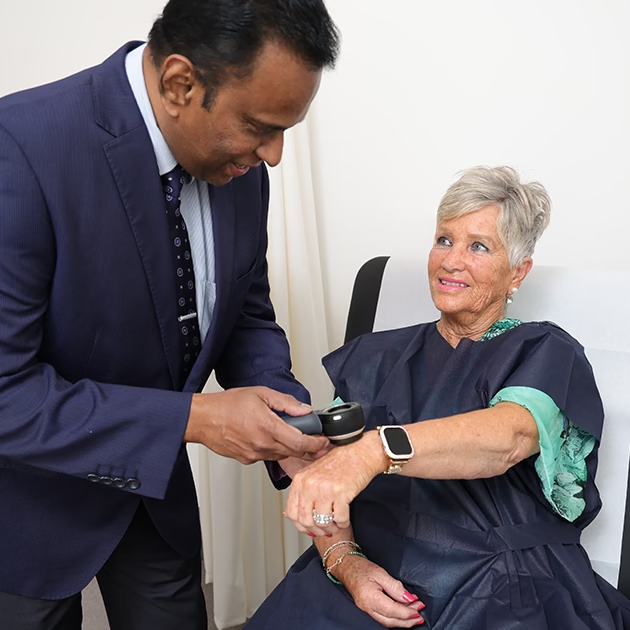
A Dermatologist has years of extra training dedicated to the way skin cancer looks and behaves. This experience helps them spot small changes that are easy to miss during a standard check. Our specialists can also provide a clear diagnosis and manage all medical and surgical treatments needed in one place.
Practitioner: Dermatologist (FACD)
What To Expect at Your Skin Check
A skin check is a visual, non-invasive medical check. We recommend removing all makeup and nail polish before you arrive so your specialist can see your skin clearly.
Step 1 | Medical History
A talk about your history with the sun, any skin cancer in your family and any spots you are worried about or your partner has pointed out.
Step 2 | Fully Body Skin Check
A head-to-toe skin check where you will be asked to undress to your underwear so the specialist can see your skin properly.
Step 3 | Dermatoscopy
Our specialists use a dermatoscope (a high-magnification handheld tool) to have a closer, more detailed look at the structure of any moles and spots.
Step 4 | Findings & Next Steps
The specialist reviews any spots of concern with you. If a lesion is suspicious, a biopsy is needed to confirm the diagnosis. Your specialist can discuss the process with you and may take the sample during the appointment or schedule a separate session.
Step 5 | Follow-up and Ongoing Care
A plan will be established based on your medical assessment, including a timeframe for receiving biopsy results and a recommendation for your next review. Though an annual visit is the standard for most, your follow-up schedule may be tailored to your specific history, age and skin type.
The Types of Skin Cancer and Sun Damage
Skin cancer develops when skin cells are damaged by ultraviolet (UV) radiation, most commonly from the sun. Over time, this damage can affect the DNA within skin cells, causing them to grow and multiply abnormally.
Basal Cell Carcinoma (BCC)
Squamous Cell Carcinoma (SCC)
Melanoma

Specialist Dermatology in North East Melbourne
When was your last professional skin check?
BOOK YOUR SKIN CHECKFrequently Asked Questions
Yes. A valid referral from your GP or another medical specialist is required for your appointment at Heidelberg Dermatology. A referral allows you to claim Medicare rebates for your consultation and helps keep your GP informed and involved in your ongoing care.
An annual check is a standard recommendation for most adults in Australia. If you have a history of melanoma or a lot of moles, our specialists might suggest coming in more often to stay on top of any changes.
If a spot requires further assessment, your dermatologist may recommend a biopsy to help confirm the diagnosis. Depending on the nature and location of the lesion, this may be performed during your appointment or scheduled for a separate procedure.
Some treatments, such as cryotherapy (freezing treatment) for sun-damaged skin or certain precancerous lesions, can often be performed during the same visit.